
潮汐、淤沙與一座學校的新開始
Meander Sway: Watershed Feast
稚葉社創×蔡濰任Young Foliage Social innovation Co., Ltd. xTSAI Wei-jen
作品簡介
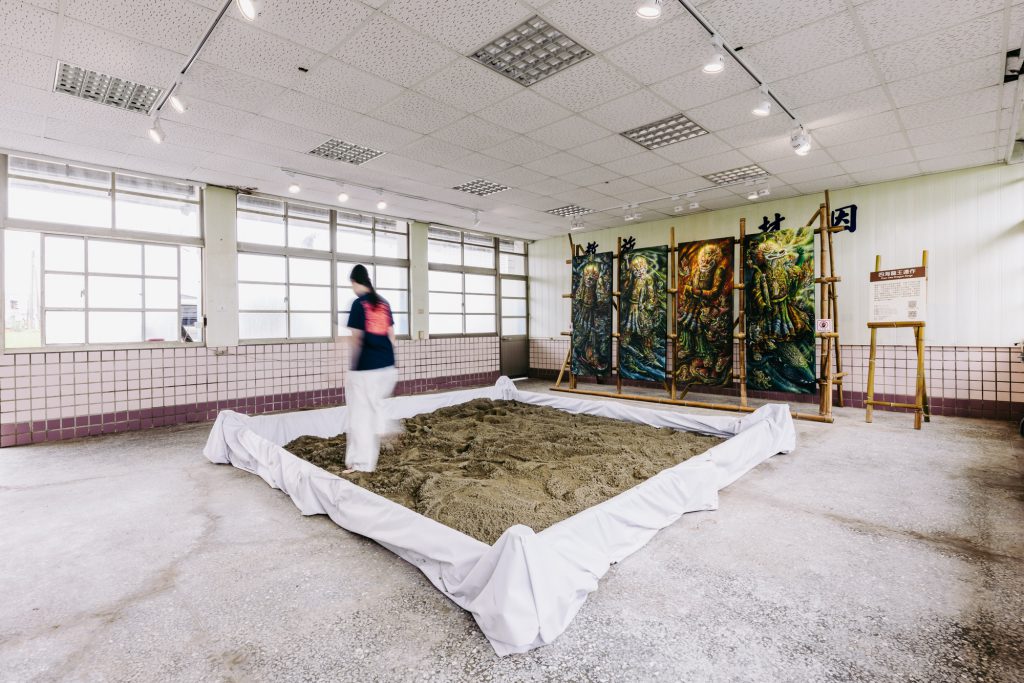
以「自然法庭」為概念,談論沙的「流失」與「堆積」,也是人的離開、新的土地生成之間的動態變化。停辦的國小教師辦公室為創作空間,作品取用曾文溪流域的淤沙為媒材創作沙池裝置,象徵介於陸地與海洋間「未完成」的潮間帶。展間國小教室曾是傳遞知識的空間,希望重新成為閱讀土地的場所,讓海風、潮汐與淤泥成為新的學習、邀請觀者在參與中重新思考人與自然的共生。
關於藝術家
蔡濰任現居臺南,創作靈感來自民俗與日常生活。創作主題主要探討民間信仰與人的關係,藉由民俗繪畫的再詮釋,建立自己與土地更親近的連結,讓觀者能夠透過作品重新擁抱自身文化裡遺失的一塊。希望透過作品向現代人傳遞先民對於土地的尊敬,更提醒多元族群互相接納的生活態度。
English
Meander Sway: Watershed Feast
Young Foliage Social innovation Co., Ltd. xTSAI Wei-jen
About the Work
Framed around the concept of the "Rights of Nature Court," the piece reflects on the "loss" and "accumulation" of sand, which mirrors dynamic shifts between human departure and the emergence of new land. Set inside the faculty office of a decommissioned elementary school, the installation utilizes silt and white sand gathered from the Zeng-wen River basin to create a sandpit installation, symbolizing an "unfinished" intertidal zone between land and sea. Once a place for knowledge transmission, the classroom is transformed into a site for reading the land, where sea breezes, tides, and silt become new teachers, inviting viewers to actively reconsider human-nature co-existence.
About the Artist
Currently based in Tainan, Tsai Wei-jen draws creative inspiration from folk customs and daily life. His practice explores the relationship between folk belief and human experience, reinterpreting traditional folk painting to establish a closer connection with the land and helping viewers reconnect with missing pieces of their own culture. Through his work, he aims to convey ancestral reverence for the land to contemporary audiences while serving as a reminder of mutual acceptance among diverse ethnic groups.