
波光粼粼
Glistening Waves
涂維政TU Wei-cheng
◎ 本作品預計於12月6日揭幕
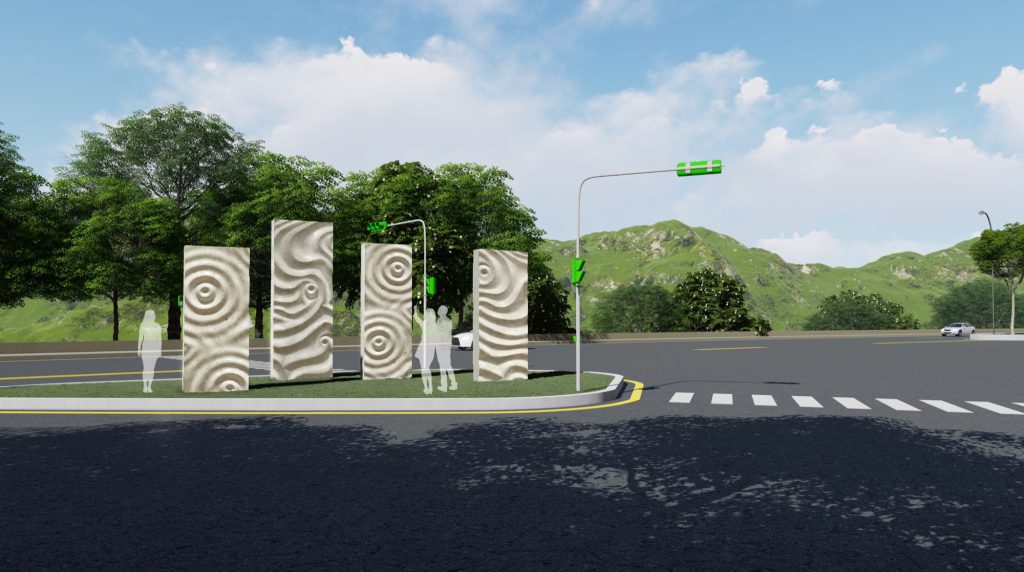
本圖為模擬示意圖
作品簡介
《波光粼粼》作品由四片大小高低不一、前後交疊參差,圖形前後略有關聯,成分為水庫的淤泥所製作構成的牆面作品。粼粼這個詞-形容「水流的清澈」或「石的明淨」,作品正面試圖表達水流的清澈,水漾般的柔美層次豐富如音律般起伏。作品背面遠看猶如岩石與水道之間的關係,近看則呈現植物浮雕的優美造型,以此來回應「石的明淨」。作品也邀請民眾參與工作坊,採集曾文水庫附近的植物來進行壓印,翻模製成作品的一部分。以水漾波紋優美,以植物採集來彰顯水資源的重要性,企圖呈現水庫旁的自然生態及植物之美。期望設置具有代表性、精神性、視覺吸引力及具情感內涵的公共藝術,為水利署曾文辦公區製造活動性、話題性與嶄新的入口意象作品。
關於藝術家
國立臺南藝術大學造形所畢業,現為國立臺北藝術大學專任副教授。創作經常使用三個向度及方法,向歷史和未來思考、在地採集、向下挖掘等人類學方法,卻呈現考古學的不可能。公共藝術作品特色是將創作過程視為一場「藝術運動」,透過深度的民眾參與活動,移動採集,考古翻模與博物學機制,將當代生活物件、土地的集體記憶,轉化為宛如歷史出土文物的「關係雕塑」作品。
English
Glistening Waves
TU Wei-cheng
About the Work
Glistening Waves consists of four overlapping concrete walls made with reservoir silt, varying in height and dimension with interconnected graphic patterns. The title's Chinese phrasing evokes "crystalline streams" and "pure, polished stones." The front face captures the clarity of flowing water through soft, rhythmic layers that rise and fall like musical cadence. From afar, the back face resembles the rugged dialogue between stone and channel; up close, it reveals delicate botanical reliefs responding to the purity of stone. The artist conducted workshops with local residents to gather and press native plants near Zeng-wen Reservoir, casting them directly into the artwork. The design features graceful, water-like ripples and integrates plant foraging to highlight the vital importance of water resources, revealing the rich natural ecology and botanical beauty surrounding the reservoir. Aiming to create a landmark public artwork that is symbolic, spiritual, visually captivating, and rich with emotional depth, the project seeks to bring vibrant energy, public engagement, and a fresh, welcoming entry identity to the Zeng-wen Office of the Water Resources Agency.
About the Artist
Tainan-born artist Tu Wei-cheng, a graduate of the Tainan National University of the Arts, is now an associate professor at the Taipei National University of the Arts. His work explores the metamorphosis of "self" into "institution," constructing fictional "historical evidence" within a fabricated archaeological context, blending "technological artifacts" with distinctive forms from various civilizations and eras. It interweaves local legends and contemporary phenomena, creating a sense of dislocation between history and reality. This dissonance serves as a commentary on the artist's perception of the current state of information-based civilization, while also reflecting on the widespread discrepancies and anxieties surrounding cultural identity in society.