Zengwen Reservoir
6 artworks・5 spots
Illustrative image; the artwork is still in progress.
ZW-1曾文辦公區前三叉路口
Glistening Waves
TU Wei-cheng
涂維政
◎ 本作品預計於12月6日揭幕
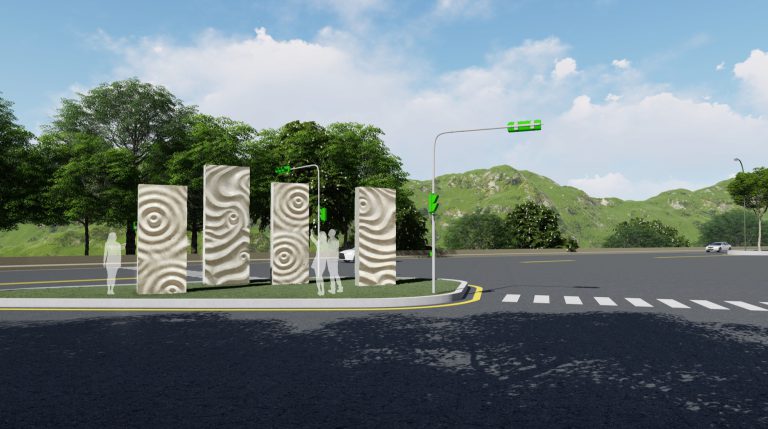
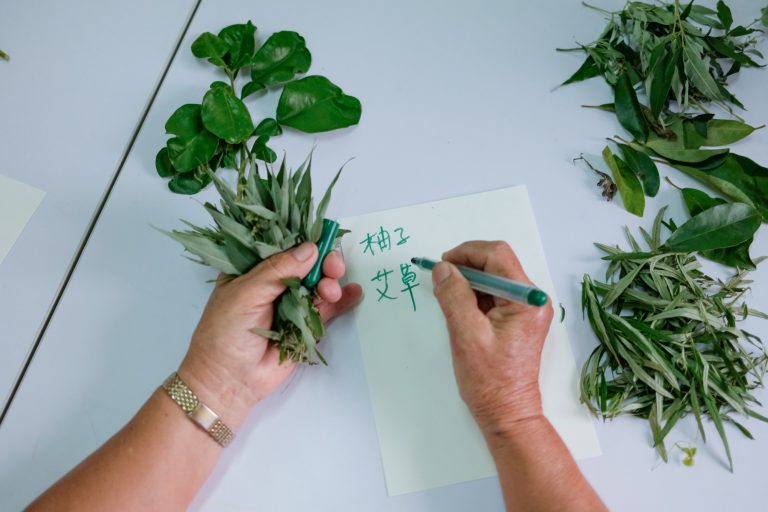
Glistening Waves consists of four overlapping concrete walls made with reservoir silt, varying in height and dimension with interconnected graphic patterns. The title's Chinese phrasing evokes "crystalline streams" and "pure, polished stones." The front face captures the clarity of flowing water through soft, rhythmic layers that rise and fall like musical cadence. From afar, the back face resembles the rugged dialogue between stone and channel; up close, it reveals delicate botanical reliefs responding to the purity of stone. The artist conducted workshops with local residents to gather and press native plants near Zeng-wen Reservoir, casting them directly into the artwork. The design features graceful, water-like ripples and integrates plant foraging to highlight the vital importance of water resources, revealing the rich natural ecology and botanical beauty surrounding the reservoir. Aiming to create a landmark public artwork that is symbolic, spiritual, visually captivating, and rich with emotional depth, the project seeks to bring vibrant energy, public engagement, and a fresh, welcoming entry identity to the Zeng-wen Office of the Water Resources Agency.
About the Artist
Tainan-born artist Tu Wei-cheng, a graduate of the Tainan National University of the Arts, is now an associate professor at the Taipei National University of the Arts. His work explores the metamorphosis of "self" into "institution," constructing fictional "historical evidence" within a fabricated archaeological context, blending "technological artifacts" with distinctive forms from various civilizations and eras. It interweaves local legends and contemporary phenomena, creating a sense of dislocation between history and reality. This dissonance serves as a commentary on the artist's perception of the current state of information-based civilization, while also reflecting on the widespread discrepancies and anxieties surrounding cultural identity in society.
Illustrative image; the artwork is still in progress.
ZW-2曾文辦公區
Agricultural Laborer
CHEN Wei-hsuan
陳瑋軒
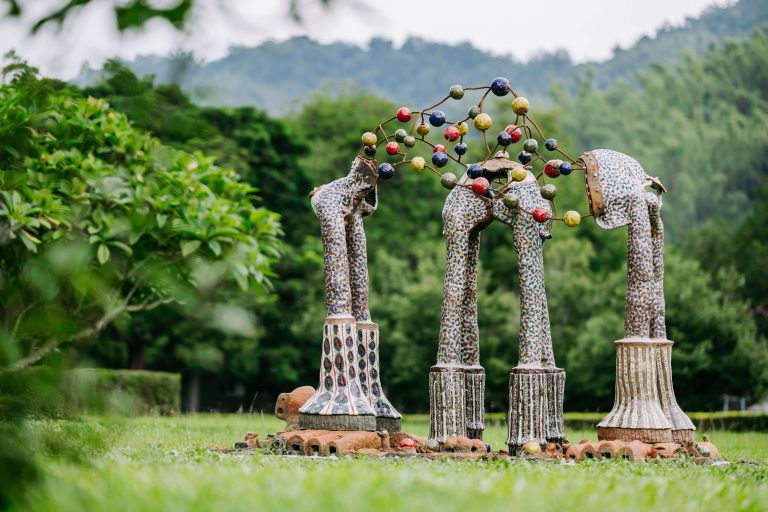
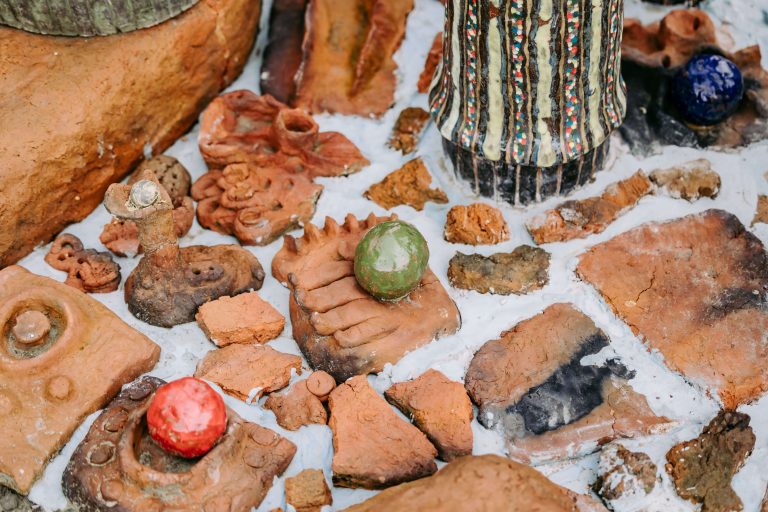
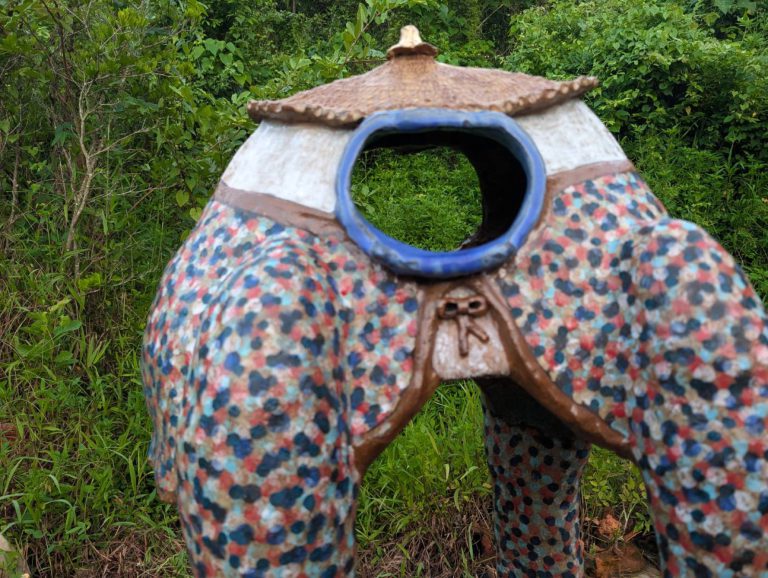
"When working as a farmhand, you constantly mix brightly colored pesticides and chemical fertilizers—vibrant reds, royal blues, greens, yellows, peacock greens, and deep blacks. Each color has its exact target on the land. If the farmland were to suddenly vomit up every chemical it ever absorbed, the earth would be a chaotic splash of brilliant polka dots. In the end, my fellow field workers and I were merely wearing those colors on our work sleeves as reflections of our labor."
About the Artist
A barefoot, clay-dusted craftsman who previously worked in community building and film art direction. Creating ceramics through intense physical labor, he translates the living earth, the joy and sorrow of farm labor, the pride of craftsmanship, and reflections on social justice into raw, satirical ceramic sculptures.
Illustrative image; the artwork is still in progress.
ZW-3曾文水庫大壩登船碼頭旁草皮
Yungu
Basu'e Yakumangana
巴蘇雅.亞古曼
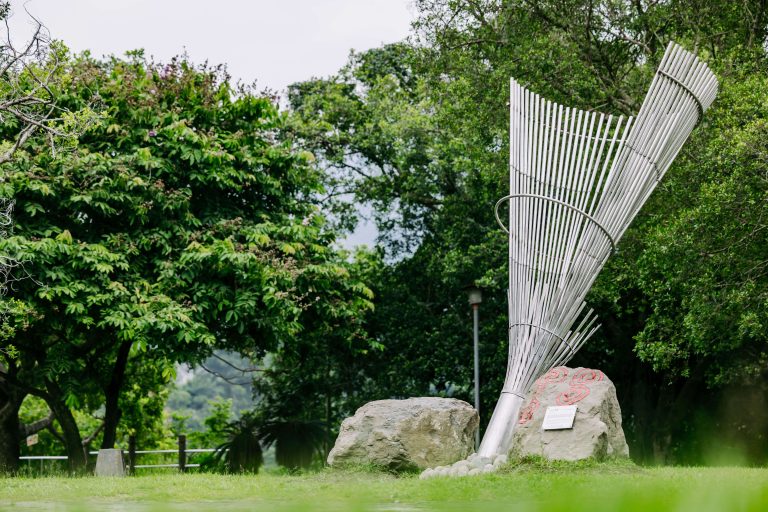
The Yungu (fish trap) is a cornerstone hunting artifact in traditional Cou culture. Traditionally woven from mountain palm gathered directly from the land, it embodies the deep, interdependent bond between the tribe and nature. This work meticulously recreates the traditional Yungu through forged stainless steel, preserving its structural form while infusing the traditional object with a contemporary metal sheen—bridging cultural memory with a transformative dialogue between craft and contemporary art.
About the Artist
Basu'e Yakumangana A Cou hunter, indigenous language teacher, and artist. His work frequently draws on Cou cultural totems, everyday life, and natural symbols to express the agricultural, hunting, and cultural characteristics of his tribe. Growing up in a Cou-speaking environment, he carries the responsibility of language transmission. For many years, he has partnered with Chashan Elementary School to conduct indigenous language and culture courses, guiding children to learn through daily cultural activities, making him a beloved mentor to the youth.

Illustrative image; the artwork is still in progress.
ZW-4曾文之眼遊客中心
A Thousand Encounters—The Zeng-wen River Memory & Co-Creation Project
Young Foliage Social innovation Co., Ltd.
稚葉社創
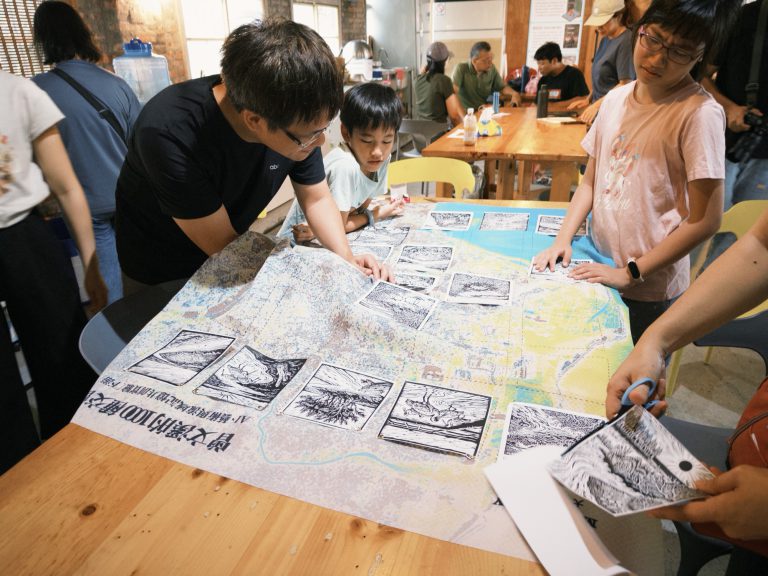
A Thousand Encounters: Tsengwen River is an art project bridging technology, the humanities, and local history. It explores how local memory can be re-perceived and preserved at the intersection of human governance and environmental transformation. By developing a custom AI generative algorithm, the project translates the hydrological data, topographical textures, and historical imagery of the Tsengwen River into a digital foundation. Local residents are invited to input their personal memories into the system to generate visual imagery. Together, these contributions overlap to form a multifaceted "River of Memory"—an alternative digital archive preserving the evolving connections between the river and its people.
Try the online co-creation (opens in a new window)
About the Artist
Deeply rooted in Southern Taiwan, Young Foliage is a social innovation team dedicated to bridging public and private sectors, enterprises, and local communities through public communication and cross-boundary integration. Centered on local issues, the team applies innovative thinking to build bridges between sustainable transition, digital technology, and artistic practice. In the 2026 Mattauw Earth Art Festival, Young Foliage leads the preliminary research and execution for the Rights of Nature Court sub-project, connecting diverse resources and NPO capabilities to foster public dialogue grounded in local sentiment and sustainable values.
Illustrative image; the artwork is still in progress.
ZW-5曾文水庫生態教育館 (觀景樓三樓)
Our Breathing Memories within the Zeng-wen River Basin
CHEN Ke-ting x Canjune
陳科廷×肯園行香私塾
◎ 本作品預計於10月31日開展
The middle reaches of the Zeng-wen River meander gracefully, nurturing wetlands, lakes, and reservoirs across the vast basin. Here, forests, orchards, paddy fields, and pastures flourish alongside human settlements lived in harmony with nature, forming a shared realm where all living beings breathe as one.
About the Artist
Holding a Master’s degree in Plant Pathology from National Chung Hsing University, Chen worked on agricultural and horticultural projects in diplomatic partner nations and researched Austronesian traditional ecological knowledge. Currently the director of Gatherers' Studio, he uses "gathering" to reconnect people, plants, and the land based on ecological observations. By bridging generations to preserve local stories, he develops cross-disciplinary art, food, and local studies courses, rebuilding intimate human-nature interactions to practice sustainable co-existence.
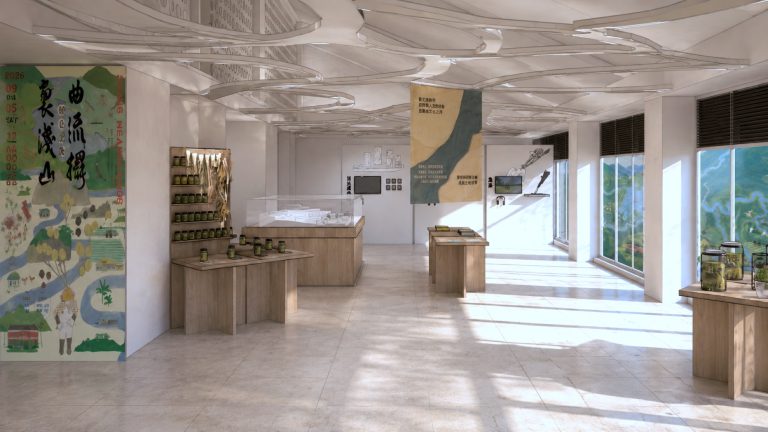
Illustrative image; the artwork is still in progress.
ZW-6曾文水庫生態教育館 (觀景樓三樓)
Archive of the Zeng-wen Reservoir Public Art Project
Archive of the Zeng-wen Reservoir Public Art Project
曾文水庫公共藝術計畫檔案室
◎ 本作品預計於10月31日開展
In collaboration with the Southern Region Water Resources Branch of the Water Resources Agency, Ministry of Economic Affairs, the festival presents three public artworks and four artistic actions within the Zeng-wen Reservoir area. Basuya Yakumangana responds to upstream fishing culture with traditional Cou fish traps (Yungu); Chen Wei-hsuan focuses on agricultural water and land production; and Tu Wei-cheng utilizes reservoir silt as a creative medium. Additionally, four artistic actions take place: “Smell Experiments," “Foothill Field Notes,” “Watershed Kitchen," and "AI Intersections.Following the flow of water, these works and actions intersect through fishing, agriculture, and material cycles, establishing the reservoir as a pivotal site for observing the negotiations and connections among the basin's multi-species ecosystem.
2026.9.5 – 12.6 | Tainan
© 2026 Mattauw Earth Art FestivalWebsite by 8f-2